Back to Blog
How AI Agents Are Changing Digital Marketing in 2026
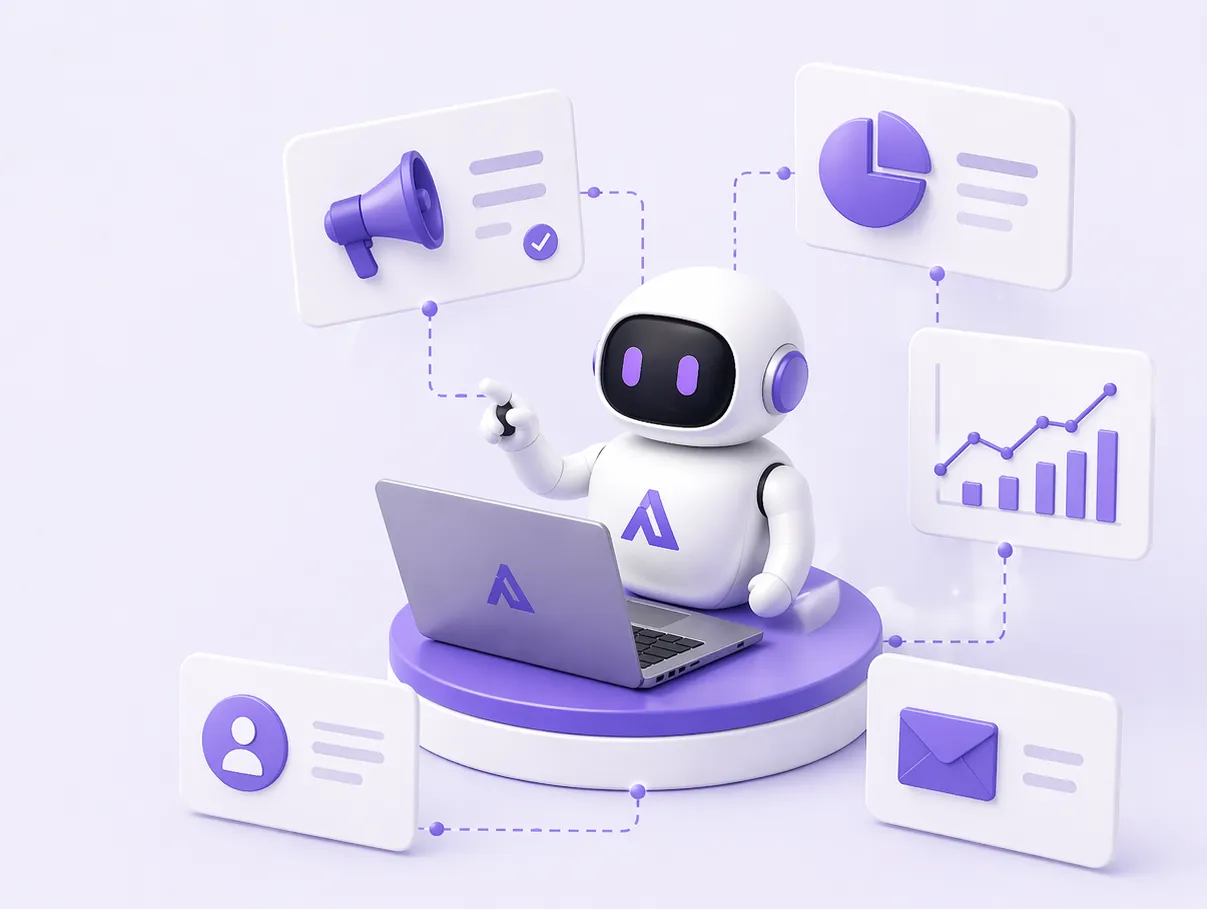
In 2026, AI agents aren't just tools you prompt — they're collaborators that plan, execute, and optimize marketing campaigns on their own. If you're still thinking of AI as a copywriting assistant, you're already behind.
What Is an AI Agent (and Why It's Different from a Chatbot)
A chatbot responds to questions. An AI agent pursues goals.
The difference matters enormously for marketing. While a chatbot waits for input, an agent can be given a target — "increase newsletter signups by 20% this quarter" — and then autonomously research audiences, draft email sequences, A/B test subject lines, and adjust strategy based on results.
Modern AI agents in marketing typically combine three capabilities:
- Perception — reading analytics dashboards, social listening feeds, and CRM data
- Planning — breaking a goal into a sequence of subtasks
- Action — executing those tasks via API integrations (posting content, adjusting ad bids, sending emails)
Tools like AutoGPT, LangChain agents, and proprietary platforms from HubSpot and Salesforce are making this accessible to teams that aren't AI engineers.
The 4 Areas Where Agents Are Having the Biggest Impact
1. Content Production at Scale
AI agents can manage entire content calendars. Given a brand voice guide, a keyword list, and a publishing schedule, an agent will draft articles, generate social variants, and queue posts — with a human reviewing only the final output.
The result isn't just speed. Agents maintain consistency across hundreds of pieces of content in a way that's nearly impossible with a human team.
2. Paid Media Optimization
Campaign management has historically been labor-intensive: monitoring CPCs, adjusting bids, pausing underperforming ad sets, reallocating budgets. AI agents now handle this continuously — not just daily, but hourly.
Meta and Google already embed agent-like automation in their ad platforms. Third-party tools take this further by acting across multiple platforms simultaneously, making decisions based on real-time ROAS data.
3. Lead Nurturing and Personalization
Static email sequences are giving way to dynamic flows that adapt based on behavior. An AI agent monitors what a lead clicks, how long they stay on a pricing page, and whether they've engaged with a competitor — then adjusts the next touchpoint accordingly.
This level of personalization was previously only possible for enterprise companies with large RevOps teams. In 2026, it's accessible through tools like Clay, Customer.io, and Klaviyo's AI features.
4. Competitive Intelligence
Agents can monitor competitor websites, social feeds, and ad libraries continuously — surfacing changes in positioning, pricing, or messaging within hours. Marketing teams use this to react faster and spot opportunities before they become obvious.
What This Means for Your Team
The teams winning with AI agents in 2026 aren't replacing marketers — they're restructuring what marketers do. The shift looks like this:
The marketers who thrive are those who understand how to brief agents well, evaluate their output critically, and know when to override them.
Getting Started Without Overhauling Everything
You don't need to rebuild your marketing stack to start using AI agents. Three practical starting points:
- Start with content — Use an agent to handle first drafts for blog posts and social content. Keep a human in the review loop. This alone can 3x output with the same team size.
- Automate one campaign — Pick a single paid channel and let an agent manage bid optimization for 30 days. Compare performance against your manual baseline.
- Set up a competitive monitor — Use a lightweight agent (even a well-configured Make.com workflow) to track competitor pricing pages and send you a Slack alert when something changes.
The goal isn't full automation. It's freeing your team from repetitive execution so they can focus on strategy, creativity, and the judgment calls that AI still gets wrong.