Back to Blog
10 Questions to Qualify a Lead Before Calling (And Stop Wasting Time on Prospects That Don't Close)

By the time you dial that number, you should already know whether the lead has urgency, budget, and authority to decide. The first 3 questions can be automated via ManyChat before the call — the other 7 close the qualification in the first 5 minutes.
What You Need to Know Before You Call
The problem isn't the number of leads — it's that most arrive without context. Calling a lead without knowing their urgency, approximate budget, or whether they're the decision-maker is gambling your most valuable selling time.
An effective qualification system for service professionals needs to answer four questions before the sales conversation starts:
|
Dimension |
What it reveals |
|---|---|
|
Urgency |
Do they need to solve this now, or are they "just exploring"? |
|
Fit |
Is their problem the one you solve? |
|
Budget |
Do they have a real capacity to invest? |
|
Authority |
Are they the decision-maker, or do they need to check with someone? |
Marketing automation increases sales productivity by 14.5% and reduces marketing overhead by 12.2%, per Nucleus Research — and most of that savings comes from not calling people who were never going to close.
The 10 Questions, Organized by What They Reveal
Urgency (questions 1–2)
1. How long have you been dealing with this problem?
Reveals whether there's real urgency or whether the lead is still in exploration mode. Someone who's been stuck for 3 months has more pressure to act than someone who just identified the issue last week.
2. By when do you need this resolved?
A concrete deadline ("before end of month", "before summer") is the clearest signal that there's buying urgency. Without a timeline, the close can be pushed back indefinitely.
Fit (questions 3–5)
3. What specific outcome are you looking for?
Confirms whether what you describe as a solution matches what the lead actually expects. A coach who works on business scaling and a lead who wants "personal motivation" aren't a good fit — better to know before the call.
4. Have you tried solving this before? What happened?
Surfaces anticipated objections ("I already tried another coach and it didn't work") and reveals the lead's level of sophistication. A lead who's already invested in similar solutions needs to hear what makes your approach different.
5. Are you the one who makes the decision to hire, or do you need to check with someone?
Critical for service professionals. If the lead needs to "talk to their partner" or "check with a business partner," that person should be on the call or the close gets delayed. Better to know upfront.
Budget (questions 6–7)
6. Do you have a defined budget for resolving this?
Don't ask for the exact number yet — just confirm that a budget exists. A lead who answers "I don't have a budget yet" or "depends on what it costs" signals the decision isn't ready.
7. What range are you thinking?
If question 6 gets a positive answer, this one completes the picture. Offer ranges to make it easier: "Are you thinking something in the $200–$500/month range, or a larger investment?" This eliminates calls where the price gap is too large to bridge.
Expectations and close-readiness (questions 8–10)
8. What specific result would make you say this investment was worth it?
Anchors the conversation in measurable outcomes. It makes closing easier because when you present your offer, you can connect it directly to what the lead already described as success.
9. On a scale of 1 to 10, how much of a priority is solving this in your life or business right now?
A lead who answers 6 or below rarely closes on the first call. One who answers 9 or 10 is ready to decide. This question lets you calibrate the pace of the sales conversation.
10. What would you need to see in this conversation to decide whether we move forward?
The most underused closing question. The lead tells you exactly what objection they need resolved before deciding — before you've spent 45 minutes on the call.
Which Ones to Automate with ManyChat Before the Call
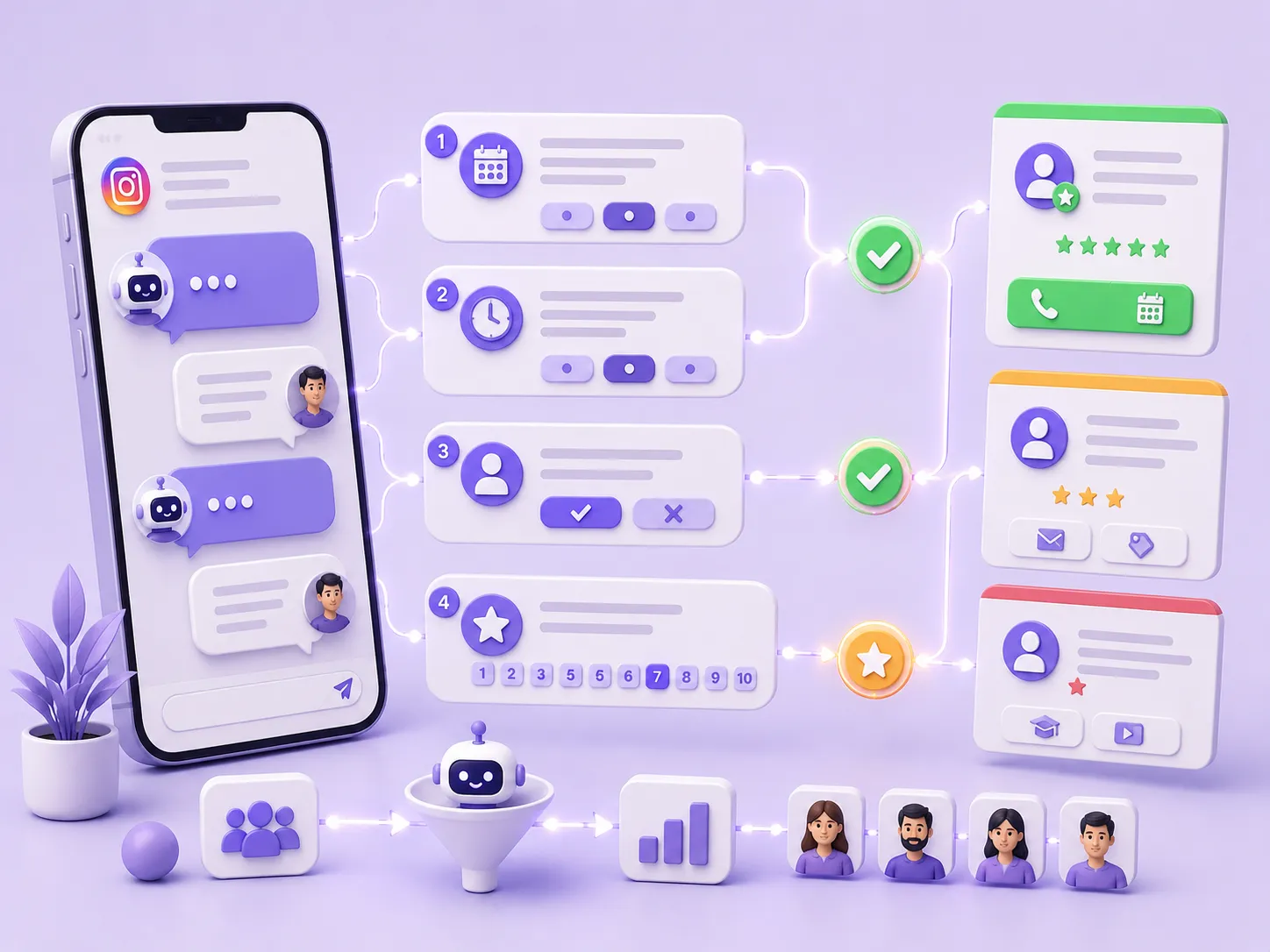
You don't have to ask all 10 on the call. The urgency and basic fit questions (1, 2, 3, and 5) can be automated in a ManyChat flow that triggers when a lead responds to an ad or comments a keyword.
Pre-qualification flow in ManyChat (4 questions):
- "How long have you been looking for a solution for [problem]?" → Options: Less than 1 month / 1–3 months / More than 3 months
- "When do you need this resolved?" → Options: This week / This month / No urgent deadline
- "Are you the one who makes the decision to hire?" → Yes / No, I need to check with someone
- "On a scale of 1 to 10, how much of a priority is this for you?" → Numeric range
Leads with high urgency (1–3 months or more) + decision authority + priority ≥7 go directly to the call calendar. The rest enter a nurturing sequence in HubSpot.
Accounts using comment-triggered automation see 3–5x more DM conversations per post than those replying manually, per ManyChat — which means more leads pass through the automatic filter before the team invests any time.
What to Do with a Lead That Doesn't Qualify
A lead that doesn't pass the filter isn't a lost lead — it's an immature one. The right response isn't to ignore them but to move them to a content flow.
- No urgency: enters the content list — weekly Reels, blog articles, success stories
- No clear budget: receives a HubSpot nurturing sequence with educational content about ROI
- No decision authority: follow-up includes shareable resources for the actual decision-maker
In 30–60 days, some of those leads mature. The cost of keeping them in the flow is minimal; the cost of recapturing them from scratch is much higher.
Ready to Get More Clients?
At Asio, we teach you to implement these strategies step by step through the Mastery program — combining Meta Ads, ManyChat, and conversational automation so you get more appointments and close more sales, without relying on manual messages.