Back to Blog
Cash Flow for Service Businesses: How to Get Paid on Time Without Losing Clients
Cash flow problems in service businesses aren't an accounting issue — they're a systems issue. 70% of small business invoices are paid late, per FreshBooks. The difference between professionals who get paid on time and those who chase payments is how well they automated expectations from the very first contact.
Why Service Businesses Get Paid Late
The cycle is always the same: work gets delivered, the client approves it, the invoice sits in an unread email, and collecting becomes an awkward conversation three weeks later. The problem isn't the client — it's that payment terms were never embedded in the onboarding process.
In most service businesses, the contract and payment terms get shared at signing, forgotten during the project, and only remembered when there's a delay. That means any payment reminder arrives without context and with unnecessary friction.
|
Reason for Late Payment |
% of Cases |
|---|---|
|
Client "forgot" the due date |
42% |
|
Confusion about agreed terms |
28% |
|
Client's internal approval process |
18% |
|
Client's cash flow issues |
12% |
Source: FreshBooks Invoice Study, 2024.
Collect Before You Deliver: The Structure That Eliminates the Problem
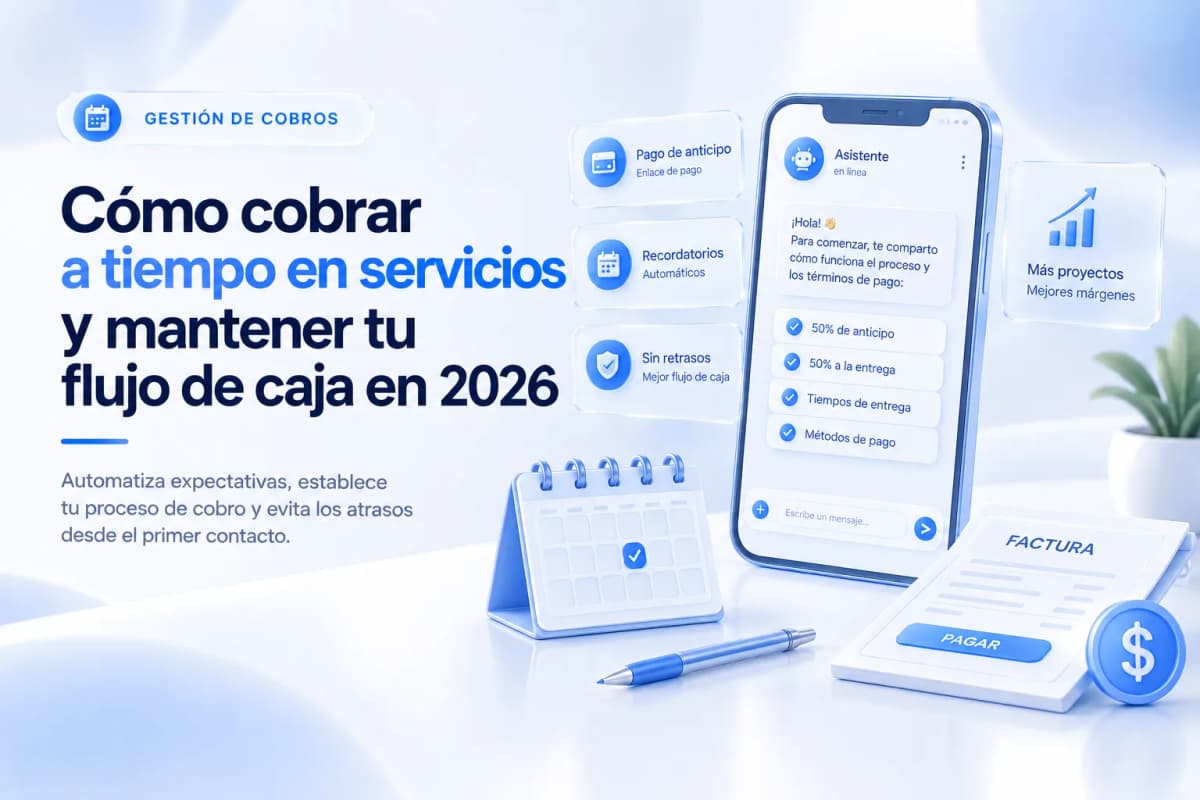
The most effective strategy isn't chasing payment — it's not delivering without receiving it. The payment models that best protect cash flow for service professionals:
50% upfront + 50% on delivery. Standard for fixed-scope projects. The deposit covers production costs; the final payment closes before files are delivered. No final payment, no file delivery — this clause must be explicit in the contract.
100% upfront for small projects. For work that takes 2–3 days or less, full payment upfront is reasonable and eliminates all risk. Serious clients have no issue with this. The ones who push back are often the ones who don't pay later.
Monthly retainer. The most stable model: the client pays a fixed fee at the start of each month, and the professional delivers an agreed number of hours or deliverables. Accounts on retainer have predictable cash flow — and can plan their Meta Ads investment without depending on whether new projects came in that month.
Automating Payment Expectations from the First DM
The moment where on-time payment is won or lost isn't the invoice — it's onboarding. If payment terms are communicated inside the first conversation flow, before the client signs, they become part of the process rather than part of a negotiation.
With ManyChat, this can be automated: when a lead responds to a Meta ad or comments a keyword, the welcome flow can include a "how this works" card that sets payment terms before the first call. Comment-triggered automation generates 3–5x more DM conversations per post than manual responses, per ManyChat — which means more leads enter the right flow from the start.
A typical onboarding flow with payment expectations built in:
- Lead comments keyword → receives service overview + payment terms
- No reply in 24h → automatic follow-up message
- Lead schedules call → receives confirmation with contract link and deposit payment link
- Deposit paid → project welcome sequence activates automatically
Payment Reminders That Don't Damage the Relationship
The most common mistake is waiting until the invoice is overdue to send a reminder. By that point, the client already associates the message with pressure — and that makes the conversation harder.
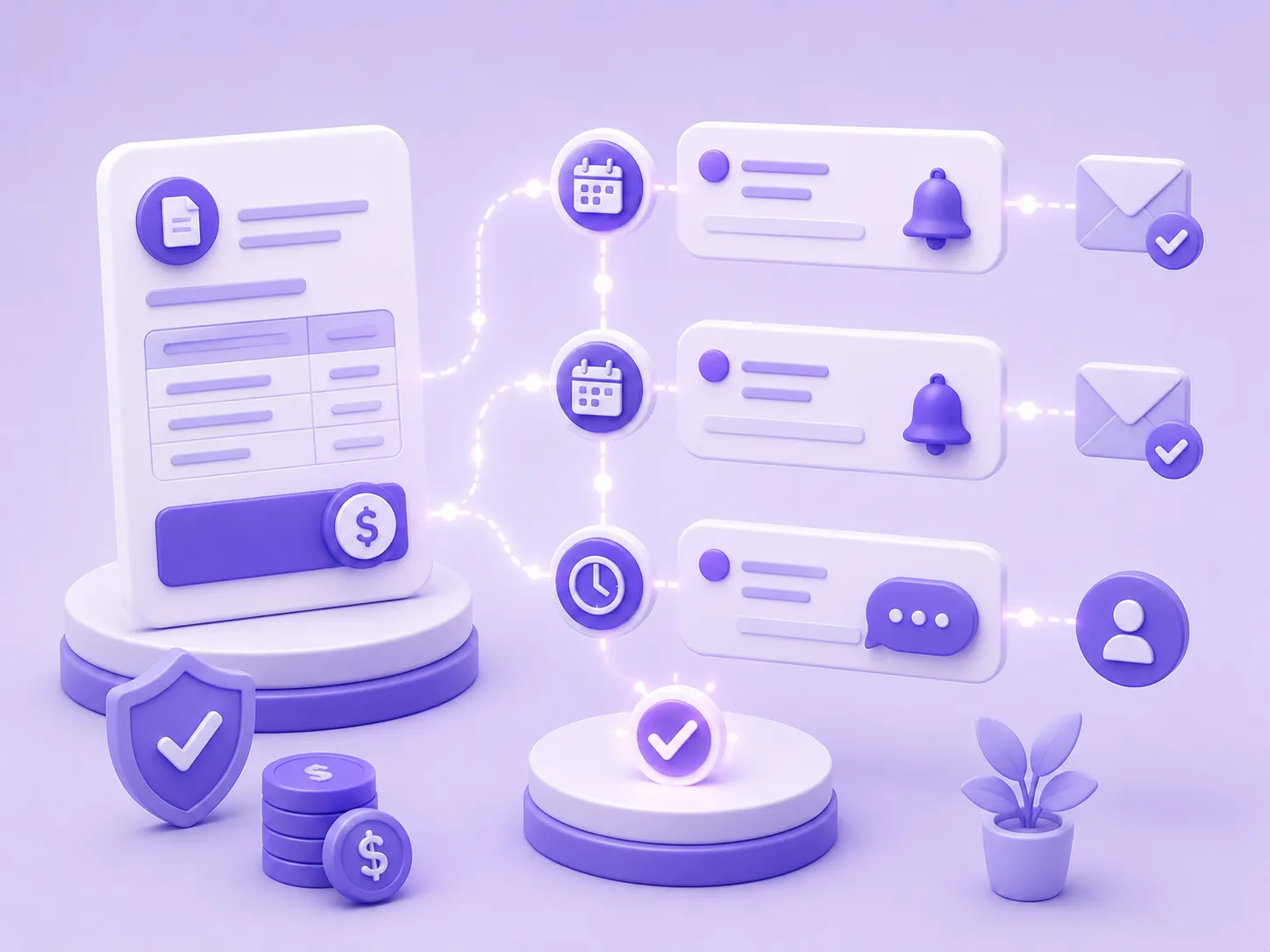
The system that works sends three messages:
- 7 days before: "Your invoice is due on [date]. You can pay here: [link]."
- On the due date: "Today's your payment date. Let me know if you had any issue with the payment link."
- 3 days after (if unpaid): personal message, not automated.
The first two can be automated through HubSpot or whichever invoicing tool you use. The third is always manual — and for that one, ChatGPT or Claude can help you draft a message that's direct without being aggressive: "Hey, I noticed the payment from [date] is still pending. Anything I can help with before you process it?"
Marketing automation increases sales productivity by 14.5% and reduces operational overhead by 12.2%, per HubSpot — and that includes the time service businesses spend chasing overdue invoices.
Ready to Get More Clients?
At Asio, we teach you to implement these strategies step by step through the Mastery program — combining Meta Ads, ManyChat, and conversational automation so you get more appointments and close more sales, without relying on manual messages.