Back to Blog
What is Conversational Marketing and Why is it Replacing Traditional Funnels
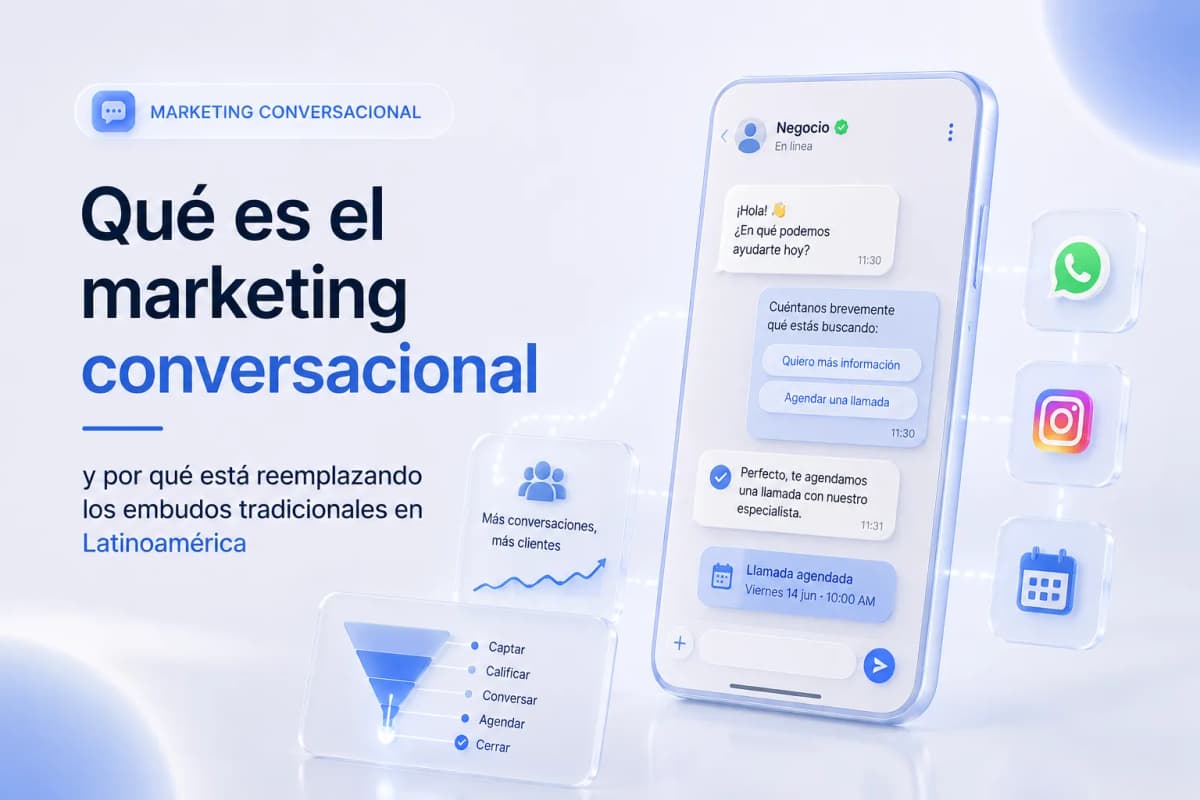
The traditional sales funnel assumes a prospect will fill out a form, wait for an email, and then schedule a call. That assumption holds less and less in markets where WhatsApp and Instagram DM are the primary communication channels — and it fails almost entirely for service businesses selling at $1,000 or more. Conversational marketing isn't a new tactic: it's adapting the sales process to the channel where the client is already active.
What Conversational Marketing Is
Conversational marketing is the use of messaging channels — WhatsApp, Instagram DM, Messenger — as the primary channel for capturing, qualifying, and closing clients, rather than doing so through landing pages, forms, and email sequences.
The difference isn't just the channel. It's the philosophy:
- The traditional funnel brings the prospect to an environment controlled by the business (the landing page) and forces them to complete steps designed for the business's convenience.
- The conversational funnel meets the prospect in the channel where they're already active and builds the relationship inside a conversation, in real time or near-real time.
In markets where messaging apps are the default communication channel — not email, not web forms — the conversational funnel has structural advantages over the traditional one.
The Real Difference Between the Two Funnels
|
Stage |
Traditional funnel |
Conversational funnel |
|---|---|---|
|
Lead capture |
Ad → landing page |
Ad → WhatsApp or DM |
|
First interaction |
5-field form |
2–3 questions in chat |
|
Qualification |
Salesperson reviews the lead days later |
Bot qualifies in 3 minutes; agent gets alert if qualified |
|
Nurturing |
Email sequence (15–25% open rates) |
WhatsApp sequence (70–80% open rates) |
|
Booking |
Lead schedules if they open the email |
Bot offers Calendly link inside the same conversation |
|
Time from lead to call |
3–14 days (typical with email nurture) |
5–60 minutes (with active qualification bot) |
|
Friction |
High: URL, form, email confirmation, wait |
Low: one click from the ad opens the chat |
The impact on results doesn't come from the technology — it comes from reducing friction at every step. Every friction point eliminated increases the conversion rate of the stage before it.
Why Messaging-First Markets Are Ahead on This
In the US and Europe, email marketing remains functional as a nurturing channel because consumers are habituated to managing their inboxes. In many markets — and increasingly in the US — that habit is weakening. Younger buyers, mobile-first users, and high-ticket service buyers increasingly expect to interact with businesses over WhatsApp, Instagram DM, or iMessage rather than through email threads.
For service businesses — coaches, consultants, real estate agents, insurance agents, clinics — the issue is more acute: a prospect who sends a WhatsApp inquiry and doesn't hear back in 30 minutes often moves to another provider. The cost of not being responsive in messaging channels is higher than the cost of a slow email response.
That means two things for any service business:
- Not being responsive in messaging costs more than most businesses realize — the lost prospect doesn't complain, they just go elsewhere
- Automating messaging creates more leverage than automating email — because the channel already has near-universal adoption in the target demographic
The 4 Components of a Conversational System
A complete conversational marketing system has four parts:
1. The trigger — how the prospect enters the conversation
- Meta ad with a Click-to-WhatsApp or Click-to-DM button
- Instagram post with a keyword CTA ("Comment INFO to get the details")
- QR code on physical materials that opens WhatsApp
- WhatsApp or chat widget on the website
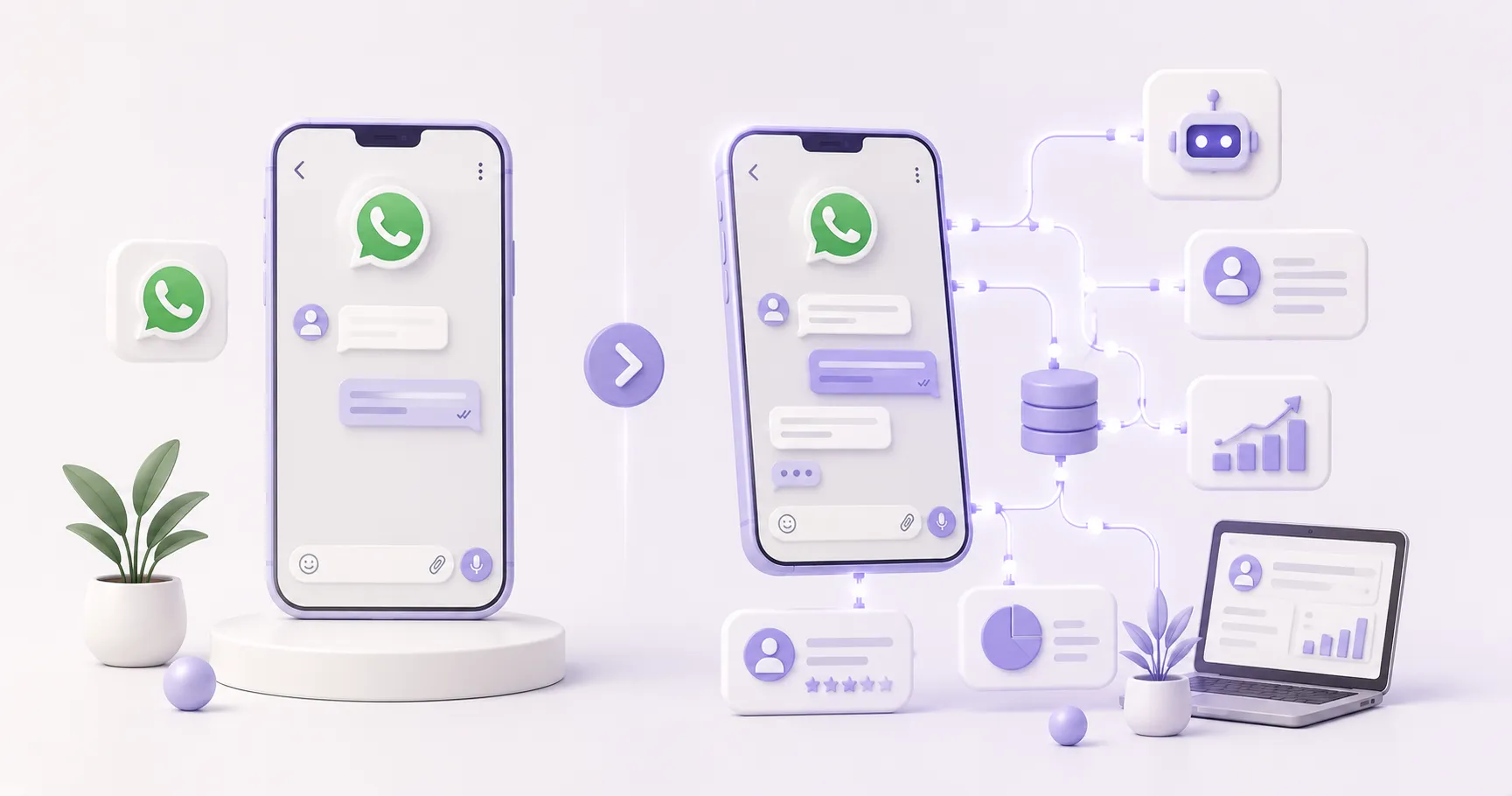
2. The channel — where the conversation happens
WhatsApp Business is the primary channel for most service businesses in markets with high WhatsApp penetration. Instagram DM is most effective for businesses with a younger audience or strong visual content presence. The choice should follow where the target audience is already active — not the business's preference.
3. The automation — what the bot does before the human arrives
The bot has three functions: send an immediate welcome (response in seconds, not minutes), qualify the prospect (2–3 questions that determine whether a call is worth having), and schedule the call or route to the agent.
The bot doesn't replace the salesperson — it prepares the ground so the salesperson arrives at a conversation where the prospect is already qualified and interested.
4. The human close — when and how the human enters
The bot handles 70–80% of the process autonomously. The human enters when the prospect is qualified and ready for a call. At that point, the context is already captured: the bot has already asked what they're looking for, how many people are involved, what their budget is. The salesperson arrives to the call with information rather than starting from scratch.
What It Looks Like in Practice
Before (traditional funnel):
A business coach publishes an ad → the prospect lands on a landing page → fills out a form → receives a "we'll be in touch in 24–48 hours" email → the coach reviews submissions the next morning → calls and the prospect barely remembers filling the form → low close rate.
Now (conversational funnel):
The same coach publishes an ad → the prospect clicks "WhatsApp" → bot sends a welcome in 30 seconds → bot asks 2 qualification questions → if qualified, agent receives an alert with the data → coach calls within 30 minutes while the prospect still has the conversation open → significantly higher close rate.
The difference isn't that the coach is a better salesperson. It's that the system converts better because it eliminates friction and shortens the time between interest and the call.
Ready to Get More Clients?
At Asio, we teach you to implement these strategies step by step through the Mastery program — combining Meta Ads, ManyChat, and conversational automation so you get more appointments and close more sales, without relying on manual messages.